My Experience in the Novavax (Nuvaxovid/Covovax) COVID-19 Vaccine Phase 3 Trial

When the pandemic started my partner Cory and I were in Florida with my family in a relatively isolated house. We knew we were returning to Boston to a lockdown and my parents knew they were returning to Pennsylvania to a lockdown. When we flew back we were given wipes to wipe down our seats and paper placemats came with the in-flight snacks, which like many of the things we did seem bizarre and futile in retrospect. Masks were as yet not a thing in the United States.

I was going stir-crazy in lockdown and signed myself and Cory up for every vaccine trial registry I could find. My main project at work was shut down and after I passed my qualifying exam over zoom I was stuck at home reading news articles and wanting to contribute something, anything to society, to the fight against covid specifically. I also wanted me and Cory to get vaccinated as soon as possible.

I was contacted about two trials: the first I was not high risk enough to qualify for; the second, the trial for the Novavax vaccine, we qualified for by virtue of living in a large apartment building with a shared stairwell and fluid airflow between apartments. I was also doing the grocery shopping at that point, which meant pre-organizing the shopping list by aisle and speed-running Market Basket at $10/minute. This was when Market Basket had a long line outside for density control and we were driving our first car, a 2001 Highlander that felt illegal to drive and indeed failed its next inspection.

Unlike the other covid vaccines, the Novavax vaccine is protein-based, which means it can live in the fridge. The vaccine includes a modified spike protein and an adjuvant. The spike protein is made using moth cells. The adjuvant is from soapbark tree extract. That the vaccine is protein-based makes it easier to transport and, I think, more palatable to people who are vaccine-hesitant.

At that point, Phase 1 and 2 results were already published. I felt comfortable enough with the results to enroll in Phase 3. I was study member 17 at the Boston study site.

These changed a bit as the study went on, but the initial planned study visits were:

  • a pre-screening phone call
  • a virtual screen (informed consent over zoom)
  • an in-person vaccination/placebo visit (3-4 hours)
  • a second vaccination visit 21 days later
  • both shots again
  • a check-in at 3 months
  • 6 months
  • 12 months
  • 18 months
  • and 24 months

The study was double-blind: everyone got four shots, with either the first two (2/3rds chance) or the last two (1/3rd chance) being the real vaccine and the other two being placebo (saline). This was my first experience with the placebo effect in my own body: when I got shots 1 and 2 I was convinced they were the real deal, but after shot 4 I am quite confident that shots 3 and 4 were the vaccine and shots 1 and 2 were placebo.

The study also involved substantial self-reporting. We kept a diary in an app on our phones where we reported our temperature (measured with a provided thermometer) and presence or absence of a list of potential symptoms. If we had a fever of at least 100 degrees or symptoms for two days in a row, the app triggered reporting of additional symptoms and blood oxygen levels, we self-administered and refrigerated provided nose swabs for three days, and we reported to the study site in person for a check-up, an interview, and additional nose swabs.

As part of Operation Warp Speed, we got paid a lot of money for being in this trial compared to non-covid vaccine trials. We got paid for every shot, we got paid for routine check-ins and blood draws, and we got paid to come in when we got sick. The money was deposited on a debit card. We also got snacks at every visit.


Shot 1: Placebo (probably)

January 21st, 2021.

When we got home we were completely wiped out. We both fell asleep on the couch in the living room, me flopped on top of Cory, both of us in very uncomfortable positions.

My arm hurt for three days. I had fatigue, malaise, and a headache for two days and joint pain for three days. The placebo effect was so strong, I assumed at the time that I had gotten the real shot. Maybe the effect was from being injected with saline. Maybe the effect was from the disruption to my routine. Maybe the effect was from expecting an effect.

Shortly after my first shot, extremely promising Phase 3 results were reported from the UK and South Africa.


Shot 2: More placebo (probably)

February 11th, 2021.

Fatigue for four days, malaise for a day, muscle pain and joint pain for two days.


Shot 3: The real deal, first dose

April 27th, 2021.

Diarrhea the day after the shot, probably not from the shot but who knows.

Here are the day’s snacks:

Here’s the study check-in area and the room where I hung out during the visit:

Here is my blood draw:

Finally, here are the buttons to the elevator, which we quite liked. The down button is the top button. The bottom button, which should be the down button, is the button for medical emergencies.


Shot 4: The second dose

May 18th, 2021.

Here is when I determined that shots 3 and 4 were probably the real deal and shots 1 and 2 were probably placebo. Fever, shortness of breath, headache, muscle aches, and fatigue for two days.

Here are my snacks and my temporary vax card:

This vax card was soon replaced with a more legitimate-looking, cardstock vax card that as you can tell for a long time lived folded up in my phone wallet:


After the initial vaccine trial we had the option of sticking around for the booster trial. This one was not double-blind: everyone got one shot, and that one shot was the real deal.

Shot 5: The booster

January 18th, 2022.

Pain in my arm for three days, tenderness for four days, and redness for two days. Fatigue for five days, malaise for three days, muscle and joint pain for four days, and headache for two days.


The study ended and was published. If you look closely, you can find me as a data point in the Phase 3 publication: “Safety and Efficacy of NVX-CoV2373 Covid-19 Vaccine.” Today, I’m in a (unpaid) biorepository study as a special and rare Novavax-only datapoint.

The vaccine got Emergency Use Authorization in August 2022. You can look up locations where the Novavax vaccine is offered here.

Being in the Novavax trial was probably the most meaningful thing I did during the pandemic, especially early in the pandemic, and possibly one of the most impactful things I will end up doing in my lifetime. It gave me purpose at a time when I felt like the news was happening to me and there was nothing I could do about it, and there was nothing I could do to stop myself and my loved ones and the city around me from being washed into the course of history. It is very special to me that I got to be a part of getting a vaccine out into the world.

I hope someday I’ll be chosen for another vaccine study. Because would I do it again? Without question.

Salem by Train and Salem by Boat

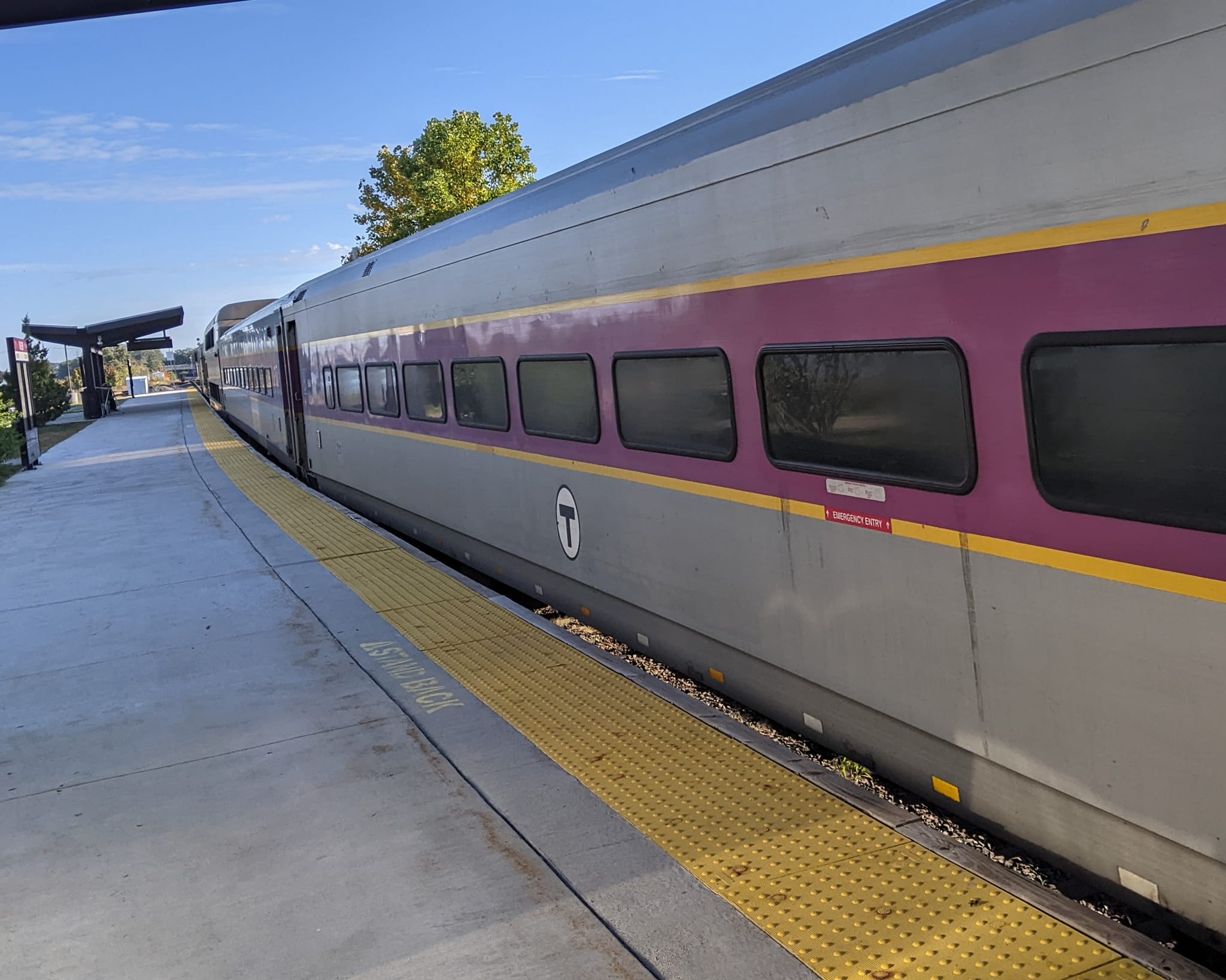
My commute from Salem to Boston and back again is very soothing and whimsical—commuter rail and sometimes the ferry. Here is a collection of some of my favorite commutes, in various seasons and weather situations.

(I fully do not expect you to watch a six-minute video of a train ride; definitely you should skim.)


Commuter rail

Usually (almost always) I take the commuter rail to get to work. Here is the commuter rail itself, in daytime and at night.


Salem station in the snow

This was my recent commute view the past weeks—Salem station in the snow.


Snowy train ride from Salem

This is the train ride accompanying those views. Possibly the coziest I have ever felt on a train.


Salem station in the fall

Here is Salem station in autumn.


Foggy train ride to Salem

This was a remarkable trip, with fog the whole way.


Birds and docks

I love the parts where we pass over the water. And sometimes I get to see birds.


From Salem to Boston by boat in the summer

When I’m lucky I get to work by boat. The commuter ferry leaves very early in the morning (7am), so I rarely make it, but when I do make it it’s always very exciting to get to be on a boat—and casually, as my commute. Here is the ferry ride from Salem to Boston in the summer.


Boston in the fog

Here is Boston in the fog, from the Boston (red line) side of my commute.


Boston in the fall

Here is Boston during sunset in autumn, viewed from the red line.


Me on the train

Here is me on the commuter rail, in November 2021. I still wear my mask for my commute. (If I get covid, it’s not going to be on the commuter rail or the red line or the green line or the orange line—and no one being able to read my facial expressions is a nice bonus.)


My Morning Shower Uses 22.4 Gallons: Comparing Water Usage of My Water-Using Activities to Reduce My Water Use During Our Massachusetts Drought

Ten of the 14 counties of Massachusetts are currently in a Level 3 drought, Critical Drought—including Suffolk County, which contains Boston; Middlesex County, which contains Cambridge and Somerville; and Essex County, which contains Salem. This is a ban on all non-essential outdoor water use (not including our vegetable garden).

Drought map from mass.gov.

This past month watering has sometimes felt kind of futile. I’d water and then less than an hour water the soil would be dry like I hadn’t watered at all, or our housemate PJ would water and I’d come outside and think she hadn’t watered because the soil was already dry.

Given that we are in a drought, and that I’m not really sure what Level 4 is going to look like, I got curious about how much water my various daily water-using activities take up.

Normal Shower

On Sunday I took a shower like I normally do, except this time with the drain plugged, with the water on while I:

  1. apply shampoo
  2. rinse off shampoo
  3. apply conditioner
  4. soap legs and shave
  5. rinse off
  6. brush my teeth
  7. rinse off conditioner
  8. soap everything
  9. rinse off

This shower took 16 minutes and 20 seconds.

At the end of the shower the tub was full to 13.7 cm depth in the middle or 13.4 cm depth one-third of the tub in from each side. I’m going to assume the average depth was about 13.4 cm. The sides of the tub are sloped, but halfway up the depth of the water, at 6.7 cm depth, the tub is 50.8 cm wide and 124.5 cm long. The volume of water, then, was 13.4 cm × 50.8 cm × 124.5 cm = 84,700 cm³, or 22.4 gallons.

(I also timed how long it takes our shower to fill two cups. It took 6 seconds to fill 2 cups, or 48 seconds to fill a gallon, which means 16 minutes and 20 seconds used 20.4 gallons of water. I’d say the two estimates are close enough.)

Water-Saving Shower

On Monday I took a water-saving version of my usual shower, which went like this:

  1. turn on shower, get moist, and turn off shower
  2. apply shampoo
  3. turn on shower, rinse off shampoo, and turn off shower
  4. apply conditioner
  5. soap legs and shave
  6. brush my teeth
  7. turn on shower, rinse off conditioner, and turn off shower
  8. soap everything
  9. turn on shower, rinse off, and turn off shower

Still the same number of steps, just colder and creepily quiet.

This shower took 12 minutes and 36 seconds total, including both water-off times and water-on times. At the end of it the tub was full to 5.4 cm depth in the middle or 5.1 cm depth one-third of the tub in from each side. Halfway up the depth of the water, at 2.6 cm depth, the tub is 48.3 cm wide and 120.7 cm long. The volume of water, then, was 5.1 cm × 48.3 cm × 120.7 cm = 29,700 cm³, or 7.9 gallons.

Only having the water on to rinse off, in other words, uses 35.3% of the water used by my normal shower.

Bath

I started taking baths only recently, when a collaborator and friend said they’d started taking baths during the pandemic to disconnect from the world and I decided I wanted to try it. I take a bath once or twice a month, especially in challenging months, though sometimes I miss months, presumably because they aren’t challenging months. Highly recommend, especially with a nice book.

When I take a bath I fill the tub up most of the way—about 25.0 cm depth. Halfway up the depth of the water, at 12.5 cm depth, the tub is 52.1 cm wide and 127.0 cm long. The volume of water, then, is 25.0 cm × 52.1 cm × 127.0 cm = 165,400 cm³, or 43.7 gallons.

Taking a bath, in other words, uses about twice the water used by my normal shower, or about 5.5 times as much water as a water-saving version of my normal shower.

Watering the Vegetable Garden

Next I measured how much water I use when watering our vegetable garden. I timed that it takes on average 2.384 seconds (average of five samples: 2.38, 2.60, 2.50, 2.26, and 2.18) to fill two cups—or 19.1 seconds to fill a gallon—using our water hose at the setting I use, coincidentally called the shower setting. I then timed myself watering the plants, pausing the timer whenever I paused the plant-watering. It took me five minutes and 26 seconds to water the plants, or 17.1 gallons.

Running the Dishwasher

I run our dishwasher once a day on Normal Energy Saving mode, which apparently uses anywhere from 2.4 to 6.8 gallons of water.

Back when we lived in Cambridge we had a tiny countertop dishwasher (referral link, which means I make a small amount of money if you click and buy something) I ran once a day for the two of us. At some point our kitchen sink wasn’t draining so I unhooked the output house and left it in our tiny under-sink recycling bin. A full dishwasher run filled at most a fourth of the tiny four-or-five-gallon under-sink recycling bin with dirty water, or at most 1.3 gallons.

Handwashing dishes, at least the way I do it, uses substantially more water than a dishwasher. I used to pre-rinse dishes before loading them into the dishwasher and that was dumb and I didn’t realize it was dumb until my parents pointed out to me that it was dumb. Modern dishwashers have gotten good enough that they wash the dishes quite well on their own, and even if they don’t it’s still better to just wash any still-dirty dishes with the next load. Some modern dishwashers apparently even have a garbage disposal.

Washing the Laundry

I run our high-efficiency front-load washing machine on normal or, usually, normal with extra rinse. I couldn’t find actual water usage online and wasn’t willing to spend much time looking but it looks like a similar washing machine uses 11.9-13.9 gallons. I think I run the laundry machine on average 1.5 times a week, so that averages out to 2.6-3.0 gallons a day.

Flushing the Toilet

Our toilets are water-saving toilets with two flush modes, one that uses 1.6 gallons and one that uses 1.1 gallons.

Apparently older toilets from the 1980s through 1992 used 3.5 gallons per flush, and earlier toilets used 5.0-8.0 or more gallons per flush. The average American apparently flushes the toilet five times a day, so the difference between an old toilet and a new toilet adds up.

Washing My Hands

I timed myself washing my hands: 16 seconds. Running the sink for eight seconds filled two cups of water, so washing my hands uses four cups of water, or one-fourth of a gallon.

Drinking

Apparently an adequate daily water intake is 11.5 cups (0.7 gallons) for women or 15.5 cups (1 gallon) for men. I assume I drink less than that.

Conclusions

Here’s the final accounting.

Bathing options:

  • taking a water-saving shower: 7.9 gallons/person/day
  • taking a normal shower: 22.4 gallons/person/day
  • taking a bath: 43.7 gallons/person/day

Going to the bathroom:

  • flushing a water-saving toilet: 1.1-1.6 gallons, or maybe 5.5-8.0 gallons/person/day
  • flushing a 1980s-1992 toilet: 3.5 gallons, or maybe 17.5 gallons/person/day
  • flushing a really old toilet: 5.0-8.0+ gallons, or maybe 25.0-40.0+ gallons/person/day
  • washing my hands: 0.3 gallons, or maybe 1.5 gallons/person/day

Dishes and clothes:

  • running the dishwasher: 2.4-6.8 gallons, or 0.8-2.3 gallons/person/day
  • running the laundry machine: 11.9-13.9 gallons, or 1.3-1.5 gallons/person/day

Sustaining life:

  • drinking: 0.7-1 gallons/person/day
  • watering the vegetable garden: 17.1 gallons, or 5.7 gallons/person/day

My personal total daily water usage ends up at 42.4 gallons per day, 22.4 of those gallons being my showers:

I am needless to say absolutely horrified by my water usage. I’m surprised by just how much water my daily showers use relative to the rest of my water-using activities, and how much a small (to me) change to my shower habits improves my overall water usage—me switching to water-saving showers should save about 5,300 gallons a year, which is enough to fill a 15-foot-diameter backyard swimming pool. I’m also stunned by how much water our water-saving toilets save. The dishwasher and laundry machine use more water than I expected, but when that water is divided by the number of people and frequency of use they use less water than I expected. Once the water use from showering is decreased, watering vegetables and flushing the toilet become close contenders, which also surprises me—but that means those are the areas to focus further improvement.

PJ and Cory set up a giant 55- or 60-gallon rain barrel that collects the water that runs down the gutters from the roof. The rain barrel has so far vacillated between no use for weeks to overflowing in a few days, because that is about what the weather is. We also collect about two gallons of water a day from the basement dehumidifier. Both of these sources we use to water plants, so they offset our water usage a little bit.

Some easy ways I am going to try to use less water without altering my lifestyle:

  1. I’m very happy with the water-saving version of my shower, especially now that I am also occasionally taking baths and I should offset the baths somehow. The water-saving version allows for less standing around in the flowing water, but I listen to music (this is my shower speaker—referral link so if you click and buy I get a small percentage) while I shower anyway so maybe that’s okay. When it’s not so hot I sometimes switch from daily shampoo and conditioner to shampoo and conditioner once every two days, so that will also help. I also have been considering trying sugar waxing instead of shaving to save shower time (not actually for the water but because I’m lazy), so that will also help a little.
  2. It should also be very easy to decrease water usage from hand washing just by running the water less intensely; I could probably use half the water without noticing much difference.
  3. Right now I am the kind of person who wears clothes once and then washes them even if they are still clean. I am going to start wearing pants and skirts at least twice before declaring that they are dirty. I’m also going to buy more of our rate-limiting clothes, which is bras for me and work shirts for Cory, so that we can stretch the time between laundry-doings a tiny bit. Not just water saving—again, I am lazy.
  4. Kind of tempted to not flush pee when I’m working from home alone. Kind of. We’ll see how committed I end up being to this endeavor.
  5. Our housemate/friend/landlady PJ is thinking about getting a second rain barrel, which will shift more of our vegetable garden watering to rainwater (when we get rainwater).
  6. We are also thinking about switching our vegetable garden watering to drip irrigation, which should use less water—but that’s a lot of work and who knows if we’ll get to it.

Luckily the biggest changes are not hard to make. I’m glad I measured.

How to Protect Yourself From Bedbugs Before They Even Show Up

As an Amazon Associate I earn from qualifying purchases. This blog post includes links with my Amazon referral code. If you click one and buy something, I get up to 4% of the price as commission. You don’t have to buy these things from Amazon—actually, you don’t have to buy these things at all. You can also support me by buying merch of my art, by buying me a campground store decaf coffee, or by simply reading and enjoying. Thank you!


Bedbugs.

In our approximate decade living in Cambridge, the latter half in an apartment, we have had three close but thankfully not that close brushes with bedbugs.

One. The winter of the first year of my PhD, right when my first semester of final projects was due, they moved into and through the lower floors of the building, increasingly higher, increasingly closer, making it as far as an apartment sharing one edge and a lot of drywall with ours on the floor below us. The person management was blaming, who lived on the second (technically first, 0-indexed from the basement) floor, had all her belongings in trash bags in the hallway for days or weeks or a week and insisted it wasn’t her fault and furthermore that her life was falling apart. Management said she was filthy. She didn’t seem filthy. She moved out.

Two. They came back again more recently to our building—and again they stayed in the lower floors, not making it as far up this time.

Three. This past year, one close friend’s roommate brought them from NYC.

The latter two times, thanks to the preparation and work we put into the first, were unpleasant but easy. It took us less than an hour to prepare our apartment for the possibility of bedbugs and to protect ourselves and our belongings.

The first time sucked.

I was approaching my usual end-of-semester burn-out and feeling invisible and directionless at work. Worse, my partner had been laid off the month before, which meant we were both frayed. It also meant we were both living off my stipend for an unknown length of time. His life wasn’t going the way he’d planned. My life wasn’t going the way I’d planned. And then bedbugs.

The prospect of needing to pay—money, time, energy, all in limited supply—to dry-clean, throw out, or replace all of our clothes, mattresses, cloth furniture, cherished stuffed animals (our plushies!), other fabrics, possibly books (our books!), possibly other furniture—almost everything, actually—was…not nice. Rather than face whatever that would have been like we read everything we could find about bedbugs and took extensive preventative measures. They worked, by the way, along with a massive dose of luck, three times.

The key takeaway is that, after a lot of suffering the first time through, we were ready—not only for the first attack, but for the second and third as well. In our case, the prophylactic was time pressured and very inconveniently timed. In your case, it can be stretched across any more convenient length of time, to whatever extreme you prefer. I want you to be ready, and that’s why I wrote this blog post.

When it comes to bedbugs, you have three goals:

  1. avoid bringing the bedbugs into your apartment;
  2. in case they do show up, don’t give the bedbugs anywhere cozy to live; and finally
  3. in case they show up and stay, make it as fast, easy, and cheap to deal with them as possible.

0. Helpful information about bedbugs

First, some helpful information about bedbugs:

1. Avoid bringing the bedbugs into your apartment

Your first line of defense is to decrease the probability that bedbugs get into your apartment. By the time your neighbors find out they have bedbugs, they (the bedbugs, possibly also your neighbors) have probably already visited you. There isn’t too much you can do about this, but you can try. If there are holes in your floor or walls, caulk or spackle them.

Otherwise, you can take steps to avoid bringing the bedbugs in yourself.

When travelling:

  • An unknown proportion of hotel rooms has bedbugs (and the unknown is scary). If you are travelling and staying in anything other than your own tent or car, store your clothes and other fabrics in airtight ziplock bags in your bookbag/suitcase. Storing your fabrics in ziplock bags has the added benefit of making them much smaller, which is nice if you fly Basic Economy for long trips or if you like to travel with just a backpack (or both! probably both). Roll your fabrics up tightly, slide as many as you can into a ziplock bag, and smush the bag down as you close it. If you want, you can organize things bag by bag. It’s amazing how much it all shrinks.
  • Bring a trashbag for your dirty laundry. Here’s a Nature paper showing why. Put your dirty clothes in the bag as soon as you take them off and seal the bag in an airtight manner.
  • If you want to be especially cautious, keep all your travel clothes and fabrics (dirty and clean) in their sealed airtight plastic bags when you get home and dry them on high heat (possibly also wash them, if you’d like, especially the dirty laundry, but that’s not relevant here) before you reintroduce them to your life.

When acquiring “new-to-you” things:

  • Don’t bring any fabrics in from the street. Only buy or otherwise acquire second-hand mattresses or other fabric furniture items with known full (bedbug-free) history and from people you know and trust. If you see a mattress on the street, stay far away from it. Maybe cross the street.
  • Non-fabric furniture can also be a risk if it has cracks or cozy places for a bug to hide. Most of our furniture is from the street or hand-me-downs, so this one is a bit upsetting.
  • If you buy clothes second-hand, dry them on high heat or freeze them for four days before bringing them into your apartment.

On public transit:

  • If you are able-bodied, don’t sit on fabric seats on public transit or fabric seats anywhere else in public where many people sit. Standing in a moving train or bus is a great workout.

2. Don’t give the bedbugs anywhere cozy to live

Your next line of defense is to make your home less appealing to bedbugs—if they visit you, which is not entirely in your control, you don’t want them to stay. This is a list of changes, some of them easy and some of them substantial, that I hope you are able to incorporate slowly, long before bedbugs become a threat, and maintain from then on. A lifestyle.

The easiest and most impactful thing you can do is to protect your bed(s) and your couch(es):

  • Buy mattress covers for all of your mattresses (and for your boxsprings, if you use boxsprings) and zip your mattresses into them under your sheets or couch covers. Pay attention to the dimensions to make sure your mattress or boxspring will actually fit, which is very important, and that the fit is snug rather than baggy, which is less important but will make your mattress prettier and nicer to use. We bought this 15-inch-deep mattress cover for our bed and this 11-inch-deep boxspring cover for our couch/futon. (We also bought this baby bed mattress cover for my giant stuffed animal turtle.) We expected the mattress covers to be plasticky, but to our surprise they are soft and comfortable and not different from the usual texture of the mattresses.
  • Buy pillowcase covers for all of your pillows and zip your pillows into them under your pillowcases. We bought six (two sets of three) of these. Like the mattress covers, they are surprisingly comfortable and do not at all detract from the experience of using the pillows.
  • Buy bedbug traps for all the legs of your bed (and anything else with a mattress, if you’d like). Our close friend uses these, which come in white or black so they can match your bed. Bedbugs can’t walk on the slippery interior surfaces of the trap, which is how they get trapped. In addition to trapping the bedbugs, bedbug traps will also display the bedbugs to you, which is helpful when you’re wondering whether or not you have an infestation. (We tried these sticky traps the last time we were worried about bedbugs; they are indeed very sticky, which meant they stuck to our socks and were very unpleasant and also somehow surprised us each time they attacked a sock and I don’t personally recommend them, though I imagine they work.)
  • Scoot your bed away from the wall, at least a little bit—just so it isn’t right up against the wall.
  • Put any blankets and pillows not actively being used into sealed plastic bags and into storage.

The next thing you should do is to have less stuff. Sift through all of your clothes and donate anything you don’t love. Ideally, sift through all of your belongings in general, especially all fabric items. This is the most challenging step and should be repeated at least yearly, at least when it comes to clothes. You can get inspired by Marie Kondo while you do it.

(I am assuming here that you do not yet have bedbugs or risk of bedbugs. If you do have bedbugs or might have bedbugs, please do not donate your clothes and therefore your bedbugs.)

Here are two photos of me sitting in front of and then next to my possibly largest belongings cleanse in early February 2019. The bag was the size of me. I had to order an Uber to get it to Central Square. (The Uber driver was very alarmed and poked at it a lot; I like to imagine maybe he thought it was a body, especially with the way I was dragging it heavily (because it was heavy) across the pavement.)

If you live in or near Cambridge, I recommend donating to CASPAR, a local organization running a network of shelters and other programs helping people who are struggling with homelessness or drug addiction to get back on their feet. CASPAR is often especially in need of professional and interview clothes for any gender, warm coats and shoes in the winter, and men’s clothing in general—but they have other needs as well (like baby clothes and clothes hangers) and those needs change seasonally. Follow this link and email to determine if your items are needed and to set up a drop-off time. (Again, I am assuming here that you do not have bedbugs or risk of bedbugs, and that you are downsizing your closet ahead of time. Please don’t donate clothes if you have or might have bedbugs.) Please also consider donating money if you can; the pandemic has been extremely challenging for homeless shelters.

Another excellent cause, especially for any clothes that CASPAR does not need at the moment or ever, is Boomerangs, which is where this entire particular giant bag went, in part because it included sweet finds like my five-inch yellow chunky plastic open-toed sandal-heels from high school and in part because I did not yet know that CASPAR existed. Boomerangs is a family of second-hand stores that funds HIV/AIDS prevention and support.

Now that you have less stuff, especially less fabric stuff, you can enjoy and properly protect the things you have left. You are going to need trash bags and packing tape.

Your clothes:

  • Store your underwear and socks in airtight ziplock bags. This is actually very nice even if you don’t care about bedbugs. Before, my underwear and sock drawers were a mess. Now, they’re organized into ziplock bags.
  • Store any clothes and coats that live on hangers in hanging space bags. We use these—I think two have broken but they have otherwise been sturdy and convenient. Space bags have the added benefit of smushing your clothes (even if you don’t suction the bags after you close them) and giving you a lot more closet space. You can buy cascading hangers with hooks on them or cascading hanger hooks for your existing hangers to fit a lot of clothes into each bag. The space bags were the largest piece of advice bestowed on me by our neighbor with her belongings in trash bags in the hallway. (I actually didn’t know what space bags were at the time but didn’t feel confident enough to ask, which greatly enhanced the interaction.)
  • Store your larger folded clothes in large clear zipper boxes/storage bags. I find clear zipper storage bags/soft boxes very convenient for sweaters and pants. I bought a large (18 inches x 42 inches x 5 inches) one that opens from the top for my sweaters (I have a lot of sweaters) and a less large (15 inches x 18 inches x 9 inches) one that opens from the side for my pants. The zippers on these are not airtight, so I recommend you tape over the place where the zippers meet.
  • Smaller folded clothes are more challenging. I keep mine in a hanging organizer with the folded clothes in a sealed trash bag in each cubby (with the opening to the trash bag at the opening to the cubby, so the trash bag is more of a closable lining).
  • Store your dirty laundry in a closed trash bag in the hamper, not directly in the hamper itself.

Your other fabrics:

  • Keep your absolute favorite shoes and bags hanging up and in your shoe cubbies. Put the rest in sealed trash bags in storage. (As a bonus, you won’t have as much stuff hanging up or in your shoe cubbies.)
  • Any other fabrics you’re not actively using (hats and scarves and coats if it’s not cold, shorts if it is; plushies that aren’t actively on display; the big bag of fabric scraps and yarn for arts and crafts) should also be in taped up, airtight plastic bags. For storage, I find it helpful to put sealed bags of things in big, stackable storage bins.

Your walls:

  • Bedbugs can hide in wallpaper. Avoid having wallpaper. If you do have wallpaper make sure it is not loose against the wall.
  • Avoid hanging posters loosely on the wall.
  • Caulk or spackle any gaps or cracks in the walls where bedbugs could hide.

Cardboard:

  • Any cardboard boxes you absolutely need (packaging for products whose warranty has not yet expired or just enough boxes to sustain your secret book selling business) fold up and wrap entirely in plastic bags and tape shut. As a bonus, your cardboard boxes will not get horribly dusty.
  • All other cardboard throw out. As a bonus, you’ll have more storage space.

3. Make it as fast, easy, and cheap as possible to deal with bedbugs if you get them

Here is some advice that our friend who had bedbugs wants to share with you, once you are infected, in her own words.

On detecting them:

  • I think there’s this misconception that they are too small to see. Maybe if they just hatched and haven’t fed—but those don’t multiply, cause they baby. And if you have baby, then there’s def a mom somewhere, which you should be able to see.
  • If you do kill the mom, you will need to search again in a couple weeks to catch whatever eggs she laid once they are big enough to move around and feed. They won’t reproduce unless they are feeding, but that’s why exterminators usually come back for another round of inspection.
  • They aren’t invisible. They liked the corners of my bed, creases, and tags. If you look around you will find them easily. (I watched two sets of inspectors do this check and talk about all the hiding spots.)
  • If you think you have bedbugs and put your stuff through the dryer, you should be able to find their shells or dead bodies in your lint trap. Bed bugs are small, but visible.
  • Wash your sheets regularly to look for small blood stains, and kill any that might be there. All my sheets and pillow cases are white now.
  • Check behind tapestry (especially the point of hanging, just take them down every now and then, it will be obvious if they are there), around outlets, and any spots where your bed might be touching a wall.
  • If the bedbugs are dark, it’s cause they fed. And you really can’t miss the black flat circles they leave when they poop. Seeing those is a definitive sign of activity and usually is all around where they are hiding.
  • Just checking every now and then should be enough, and then calling an exterminator as soon as you see them. Save the one you find or the shells if you can—the exterminators won’t believe you if they can’t find proof too.

Working with exterminators, she ended up using her body as bait to lure the bedbugs to her bed and trap them. Which is horrifying. Here is her advice on that:

  • Limit time on places not your bed (no napping on couch) and they will come out of hiding to hunt you and get trapped in the bedbug traps.
  • This spray will repel them. But if you’re using the you-as-bed-bait method, do not spray on bed—you want them to go there and not hide. I spray my couch with this instead.

And finally—

  • My biggest mistake was the giant pile of stuffed animals I had and didn’t disturb for too long.
  • If you get encasing for your mattress neveeeeerrrrr take them off.

If you’ve done everything in Step 2, even if you’ve since gotten more relaxed, most of your belongings should be safe. If you find out that there is some risk of bedbugs, either in your building or from a friend, airtight-seal all not already closed bags containing fabrics and put any other non-essential fabrics away as well. Leave out and use only those fabrics that you are comfortable drying on high heat, consistently the same items, preferably less than one load of laundry. Anything that was already in a sealed bag or encasing (which should be almost everything) is safe and guaranteed to be bedbug-free. Your preparation not only reduces the chance you’ll get bedbugs, it also dramatically reduces the time, energy, and money the bedbugs will cost you if they settle in your apartment.

That’s it. You’re ready. You can do this.